

30th Anniversary of the single ‘Breathe’
When The Prodigy dropped Breathe on 11 November 1996, its monumental success was no accident. Following the massive impact of ‘Firestarter’, it served as the logical, darker continuation that cemented the band’s global status. To celebrate the 30th anniversary of the release, we present the most complete story of the track, digging into the uncommon details behind its production. Alongside breaking down all existing versions and remixes of this banger, we also reveal an exclusive, previously untold story behind the creation of its iconic cover art.
Breathe is up-close, in-your-face punk driven by electro-dance rhythms. While the single and its unnerving video dropped in the fall of 1996, the song’s origins trace back almost exactly a year earlier to the second half of 1995, having been written concurrently with ‘Firestarter’. Crackling with abrasive tension, the track is defined by the dueling vocals of Keith Flint and Maxim, set against an aural war between whip-cracking beats and heavy, bass-driven melodies.
Liam Howlett for Addicted to Noise: “We recorded that straight after ‘Firestarter’. And it was an instrumental for ages. We were playing it on stage and the guys were just dancing to it and stuff. It was just like an instrumental track. And I thought that it was so obvious to put a vocal on it and I think what happened is they came around and they knew the track anyway. They’d been listening to it for about three months. To tell you the truth, I think I wrote ‘Breathe’ before I did ‘Firestarter’. I wrote the instrumental of ‘Breathe’ about two months before ‘Firestarter’.”
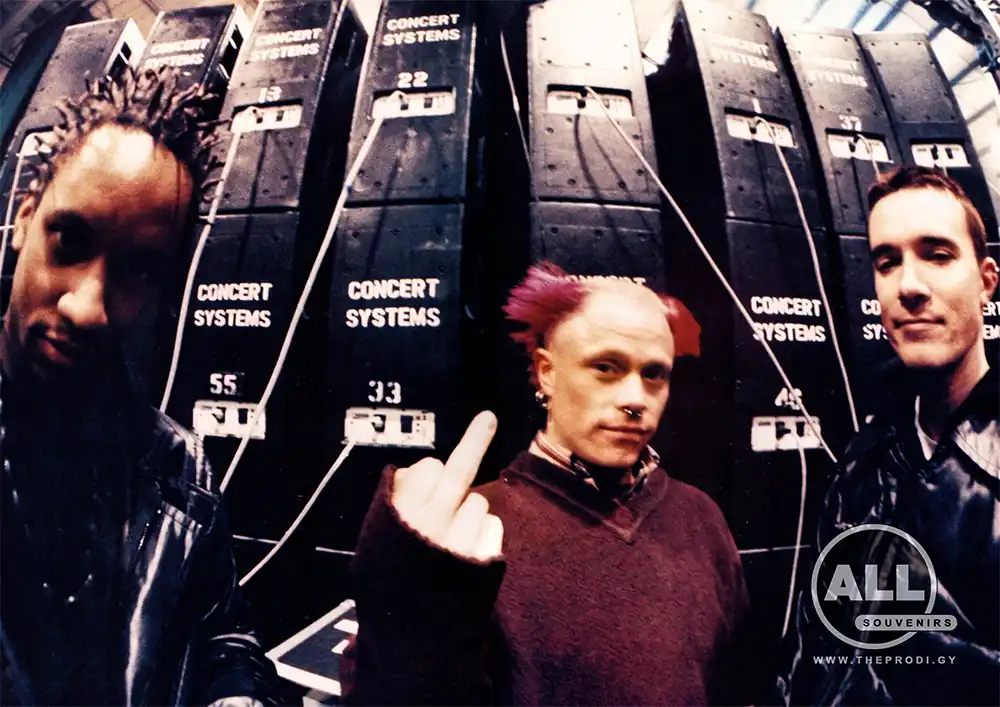
Photo by Phil Knott
The rough draft then sat untouched for three to four months before final production. The origin of the track’s iconic intro has long been a subject of speculation – producers have frequently tried to recreate the riff from scratch on synths or scoured James Bond soundtracks hunting for the elusive sample. In reality, Howlett simply sampled a few notes from a bandmate’s guitar and heavily processed them. He detailed this exact methodology in an August 1997 interview with Addicted to Noise.
Addicted to Noise: “What about the guitar part that was the beginning of ‘Breathe’? Was that something you found or was that something that you played?”
Liam Howlett: “I made that. We had a guitarist called Jim Davies. I just got him into the studio and he played a couple of notes. I just took those single notes and basically put them through the sampler… If you knew the process… I constructed the riff, in other words. Everything you hear on the tracks is basically from my head, you know. All the riffs are mine. I’ve never sampled a whole riff of someone else’s stuff. A lot of people get confused ’cause they think when they hear “sampler,” all they can think about is sampling other people’s tracks, you know. It’s not like it used to be, like with ‘Pump Up The Volume’, when it was just built around someone else’s track, you know. This is actually rock music written on electronic equipment, you know? With ‘Breathe’, with that riff, it was just… I made the riff, you know.”
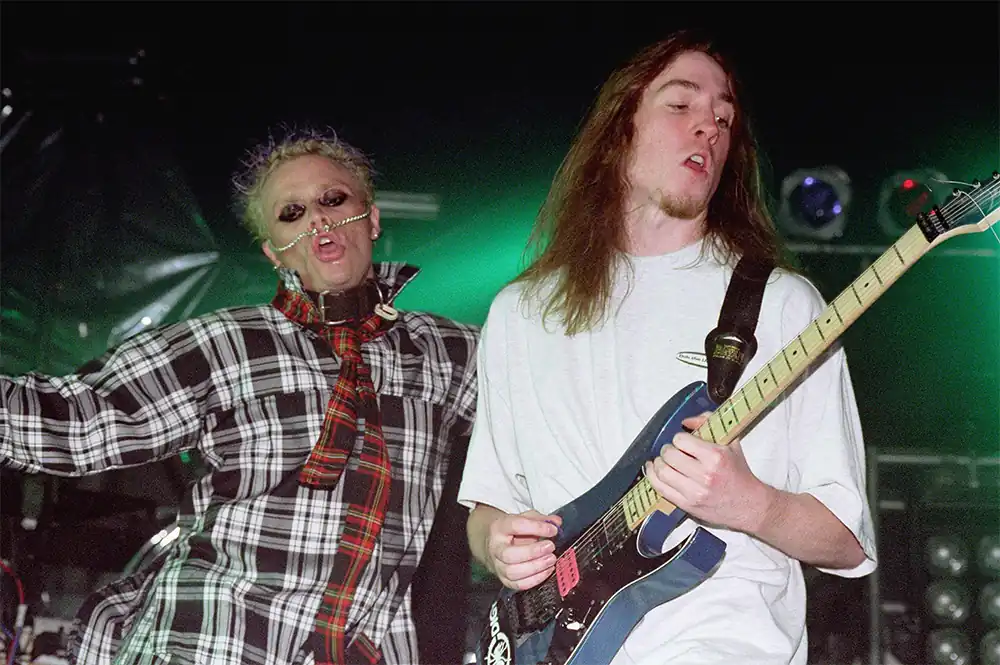
Ironically, Jim Davies himself had no idea his guitar was sampled for the intro. During a conversation with All Souvenirs, he admitted to being completely unaware of the riff’s origin. Nevertheless, his broader role in the recording process was foundational – without his guitar work, ‘Breathe’ would have lacked its signature abrasive edge.
Jim Davies for All Souvenirs: “A lot of people think the intro was guitar but it was a synth… Pretty sure Liam just played it, don’t think it’s a sample… I can say that wasn’t me! My parts are the funk guitars, the weird clean breakdown guitar and the distorted guitar chords in the main chorus!”
Liam Howlett for Addicted to Noise: “Literally for that track it was just like going in and experimenting with a couple of sounds. The first opening line is like a really twangy old guitar sound, really monotone sort of guitar sound. I made that and that was made about six months before we actually recorded the vocals. And it was just literally that, with a beat on it. And all I did was throw some loops down on a DAT. I basically just did that guitar part. [sings] That riff and just threw a beat on there. And just put it down as a loop onto DAT.”
When Liam revisited the studio a few months later with fresh concepts, the final production process accelerated rapidly.
Liam Howlett for Addicted to Noise: “Basically, if I can’t get any tracks working, I just work on little vibes, like one sound and a beat and just put it into DAT for later. Just reference more than anything. And I was listening back to that part because I thought yeah, that works. It’s got a certain groove to it. And so I lifted it back off my tape and I restructured it again. And then five months later, after we actually put that down, I think we came back and started to build. I think I experimented with a few different beats and stuff and eventually got a good groove with that song and the bassline going. And it just all sort of pulled together really easily. [Then one day] I came around and literally set up a mic in the studio. I went into the lounge for about half an hour, watched telly, come back and they’d done the vocals. It was quite a quick sort of thing really. It was just a matter of sorting a couple of syllables out, getting them to fit in right with the beats and then it was just plain sailing, it was done.”
Liam Howlett for VOX: “I wanted to create beats using the punching sounds from kung fu films, but I tried it and it didn’t really work, so then I sampled the swords and made the rhythm up from that. I said to Maxim and Keith: “Here’s where the lyrics should go”, went into the lounge to watch Neighbours or something, came back half-an-hour later and they’d finished it.”
According to Howlett, neither the lyrics nor the tune hold any deep underlying message. The focus was simply to capture the raw confrontation between Maxim and Keef. Operating as a full-on punk dance track, this raw energy translates seamlessly to their live shows. “I’m not gonna sit here and try and think of some deep meaning because it just hasn’t got one. ‘Firestarter’ has but ‘Breathe’ hasn’t”, Howlett admitted. He also noted a deliberate structural choice: rather than having vocals run consistently throughout the track, they wanted to ensure the instrumentation had “space to breathe”.
‘Breathe’ Sample Sources
- Sample: drum fill
- Sample source: Thin Lizzy – Johnny The Fox Meets Jimmy The Weed [Johnny The Fox, 1976]
- Sample: break #1
- Sample source: Zero-G – Jungle Warfare [1995] – Paul 162
- Original source: Little Richard – The Rill Thing [The Rill Thing, 1970]
- Sample: break #2
- Sample source: Nu-Matic – All Over Me (Original Mix) [Spring In My Step, 1992]
- Sample: trumpet
- Sample source: Please – Sing A Simple Song [Please, 1975]
- Sample: swords
- Sample source: Wu-Tang Clan – Da Mystery Of Chessboxin’ [Enter The Wu-Tang (36 Chambers), 1993]
- Sample: ringing snares
- Sample source: The Meters – Here Comes The Meter Man [The Meters, 1969]
- Sample: harmony
- Possible interpolation source: The Dave Bailey Quintet – Comin’ Home Baby [2 Feet In The Gutter, 1961]
- Note: There are dozens of tracks with the same chord progression, therefore it’s hard to say whether Liam was inspired by any of those. Nevertheless, ‘Comin’ Home Baby’ seems to be the first song with this harmony.
- Sample: guitar feedback fx
- Sample source: Roland JD-990 – Patches – 65 Wailing Guitar
1995 · Premiere
‘Breathe’ made its live debut in Belgrade, Serbia, on 8 December 1995 – a full 11 months before its commercial release. The Prodigy were the first major international act to perform in the city following the dissolution of Yugoslavia, arriving shortly after the partial lifting of UN sanctions. In this historically charged atmosphere, the track instantly resonated as an unofficial freedom anthem for Serbia’s urban youth. Maxim introduced the debut to the crowd, building the anticipation: “We gonna do something you’ve never heard before. When I say ‘you’ve never heard before’ I mean this is the first time it is ever been played…”
The version debuted in Belgrade was actually an early beta version, an arrangement the band kept in their live set for months. The final version, complete with the iconic “Come play my game” vocal hook, wouldn’t be premiered until July 1996. This timeline perfectly explains Howlett’s remark in the interview mentioned above: “It was an instrumental for ages. We were playing it on stage and the guys were just dancing to it and stuff”.
1995 live instrumental beta of ‘Breathe’, fully reconstructed by All Souvenirs
Rumors suggest the track’s initial late-1995 working title was Psychosomatic. However, without any surviving physical setlists from that era, this claim remains impossible to definitively verify. At the same time as the debut of ‘Breathe’, a future B-side to the single titled The Trick was added to the concert setlist. In fact, ‘The Trick’ didn’t actually exist yet at that point, and Liam was just playing around with a sample from the War song ‘Searching for Youngblood & Rommel’, occasionally using it either as an intro or as a link between tracks.
WAR – SEARCHING FOR YOUNGBLOOD & ROMMEL | T̶H̶E̶ ̶T̶R̶I̶C̶K̶ INTRO
- Sample: piano
- Sample source: War – Searching For Youngblood & Rommel [Youngblood (Original Motion Picture Soundtrack), 1978]
- Note: Played regularly as an intro in late 1995, and few times as intro and link in 1996.
By the end of the year, this sample will be thoroughly edited and finally used in the new track.
1996 · Single
Initially, ‘The Trick’ was not slated to be the b-side for ‘Breathe’. Liam originally earmarked Blow Ya Mind for the release — early version of ‘Diesel Power’ which was frequently played live. This early mix was played with the only Kool Keith’s chorus rather than the full vocal arrangement.
Before ‘Breathe’ was released Midi Management reported the tracklisting to be the following:
- Breathe
- Poison (Live)
- Their Law (Live)
- Blow Your Mind
Ultimately, Howlett completed ‘The Trick’ by the autumn of 1996, reserving the Kool Keith collaboration for their upcoming album. This timeline suggests the single was compiled under a tight deadline, with Howlett submitting whichever tracks were readily available. As a result, the final tracklist is highly unorthodox: it marked the band’s first single to exclude any remixes of the lead track, instead relying on two live recordings from their previous album. Additionally, the 12-inch vinyl edition substituted one of these live cuts for an instrumental mix of ‘Breathe’.
Sleeve Design
The sleeve design for ‘Breathe’ maintained the bold, aggressive visual aesthetic established by the preceding ‘Firestarter’ single. The project was once again helmed by Alison Fielding, the Global Head of Creative for the Beggars Group, who had previously shaped the covers for ‘Music for the Jilted Generation’, ‘Voodoo People’ and other iconic sleeves. The initial concept came directly from Howlett: his original vision was to photograph a fishbowl complete with a live goldfish, a plastic diver, a miniature castle, and colored gravel.


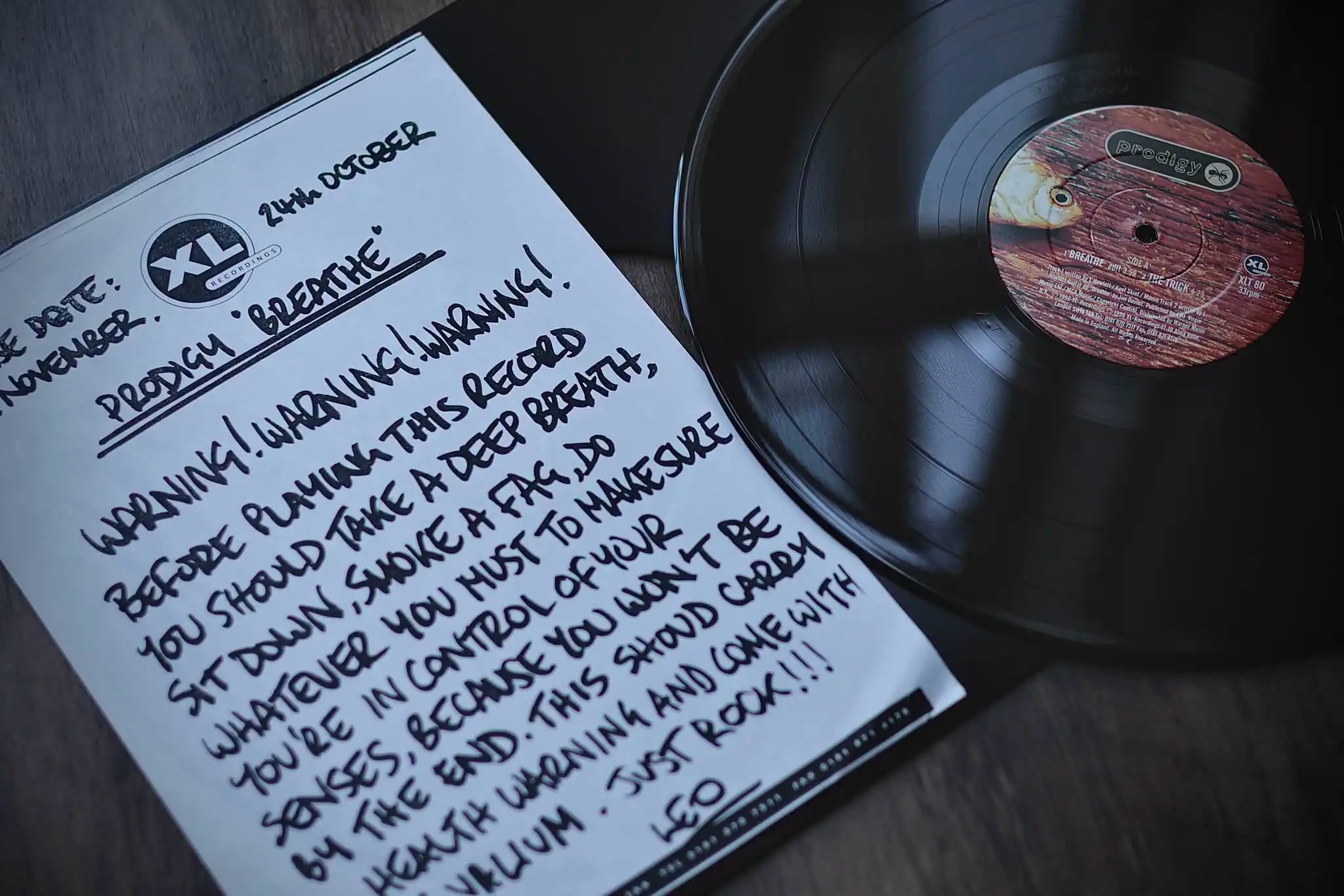
While the track title “Breathe” was heavily distorted for a grungier feel, the credits were printed completely clean.
Interestingly, Keith Flint is playfully credited as Keef Skint!
Speaking exclusively to All Souvenirs, Fielding recalled how the shoot took an unexpected turn.
Alison Fielding for All Souvenirs: “I bought all the stuff from a pet shop, and whilst we were setting it all up, the poor goldfish had died and was floating on the top of the water when we came to put it in the bowl! The poor fish had taken its last breath!”
A sudden change in direction occurred outside the studio, where someone had dumped an old red door. Fielding and photographer Mary Farbrother realized the wood would make a striking, high-contrast backdrop, prompting the impromptu idea to place the deceased fish directly on it. “We had to keep adding glycerine to it to make the water drop effects”, Fielding explained to All Souvenirs.
Alison Fielding for All Souvenirs: “We eventually used one of the images as the sleeve, and the reverse, of course, was the tail. We did use the fishbowl as the CD on-body, and I had it all in my loft for years afterwards. It’s always been one of my favourite sleeves!”


Alongside the reverse shot of the fish tail, the ‘Breathe’ back cover featured a photograph by the legendary Steve Gullick. A celebrated British music photographer and director, Gullick has captured icons like Nirvana, Nick Cave, and Pearl Jam, with his work gracing the pages of Rolling Stone, Mojo, and NME.
⠀
Interestingly, while there is virtually no public record of Steve ever discussing his work with The Prodigy, he has been a frequent visual collaborator and a close friend of the band since the mid-90s.

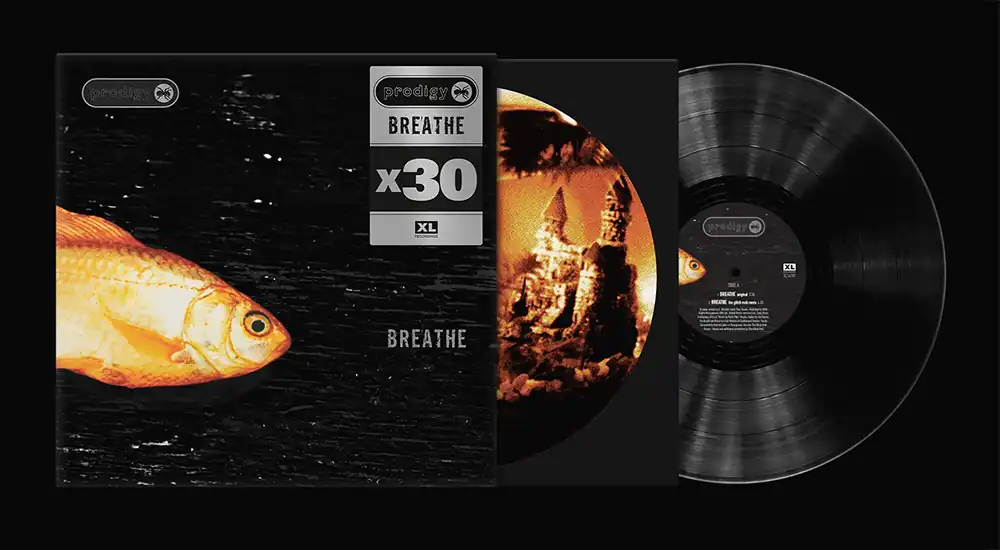
To mark the single’s 30th anniversary, XL Recordings released a special physical reissue featuring slightly altered artwork. This new rendition replaces the iconic red door with a black background heavily detailed with grey veins, offering a fresh take on the classic sleeve.
Remixes
As noted earlier, the ‘Breathe’ single stands out as quite unique: for the first time, a Prodigy release featured no remixes of its lead track. This untouched status persisted for years, making the idea of remixing ‘Breathe’ almost an unspoken taboo. The sole exception was a minor, semi-official special DJ re-edit (re-drum) that surfaced on a promotional side-release later that year.
This unspoken rule remained intact for 16 years, finally breaking in 2012 with XL Recordings’ 15th Anniversary reissue of ‘The Fat of the Land’. The release featured a bonus disc named The Added Fat EP with contemporary remixes, including two reworkings of ‘Breathe’ by Zeds Dead and The Glitch Mob. To put it bluntly: both mixes are remarkably awful.


In 2003, a snippet of an unidentified version of ‘Breathe’ surfaced on the band’s official website alongside various other demo loops. While initially resembling the standard instrumental mix, thorough audio comparison revealed it to be a distinct, alternate arrangement featuring a heavily saturated bassline. Archival deduction suggests this was an unreleased dub mix originally intended as a b-side for either the ‘Breathe’ or ‘Smack My Bitch Up’ singles. This mirrors the trajectory of the ‘Mindfields (Headrock Dub)’ mix, which was similarly considered for a b-side slot. Evidently, this ‘Breathe’ dub mix was never fully finished, relegating it permanently to a short snippet on the website.
The late-90s dub-mix trend eventually faded, only to re-emerge a decade later in the massive, sub-heavy frequencies of dubstep. As the genre dominated global stages, it naturally caught Howlett’s attention. Setting aside third-party commissions, Howlett’s first personal foray into the style was an in-house 2008 remix appropriately titled Breathe (dbstp). This version never received an official release, serving exclusively as a short filler in the band’s setlists for just over a year.
Live setlist from late 2008 w/ ‘Breathe (dbstp)’

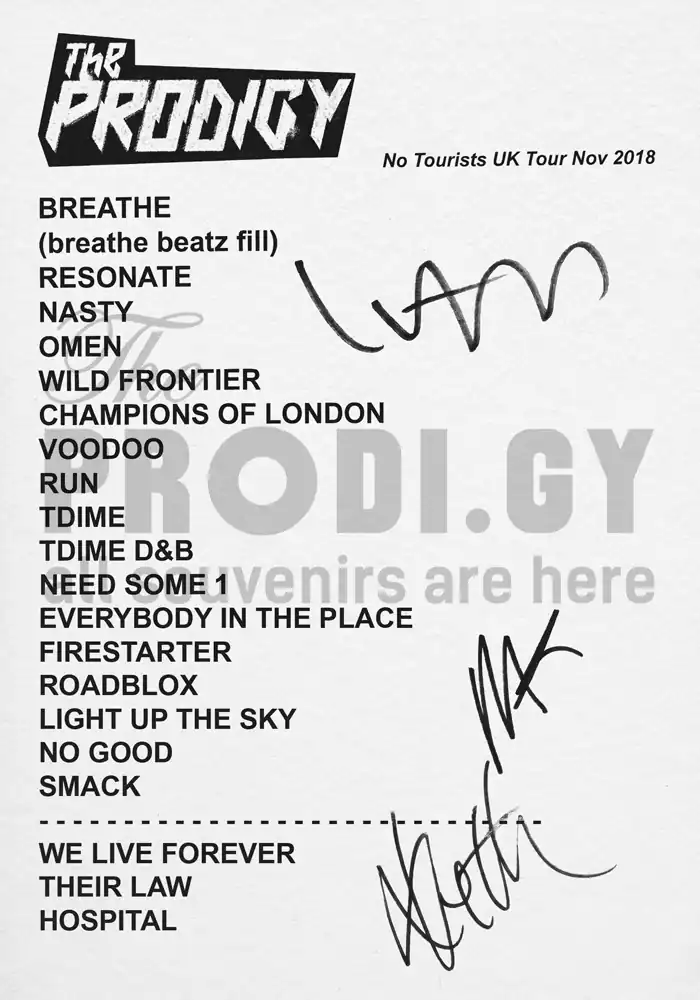
Exactly a decade later, another short filler surfaced in the band’s live setlist under the title Breathe Beatz Fill. This brief snippet ultimately served as an early teaser for a full-length collaborative rework produced by Howlett and Wu-Tang Clan‘s RZA.
Live setlist from 2018 w/ ‘Breathe Beatz Fill’
The remix finally saw an official release in June 2021 as part of the Fast & Furious 9: The Fast Saga soundtrack, titled Breathe (feat. RZA) (Liam H and Rene LaVice Re-Amp). While the franchise had previously utilized The Glitch Mob’s remix of ‘Breathe’ for the Fast & Furious 6 OST, the RZA collaboration was released strictly as a soundtrack exclusive.
Howlett noted that he initially submitted a raw, work-in-progress cut of the remix to the filmmakers, intending to finalize it later. As a result, the actual movie score utilizes this early draft, while the commercial soundtrack album features the completed mix.
Nearly a month following the soundtrack’s debut, on 23 July, the RZA collaboration received a heavy drum and bass overhaul. Once again, produced by René LaVice, this remix was issued as a standalone digital single under the official title Breathe (René LaVice Dark D&B Remix). Cover artwork was designed by Benjamin ‘Ben’ Rider, who shared rough sketch for the sleeve on his online portfolio.
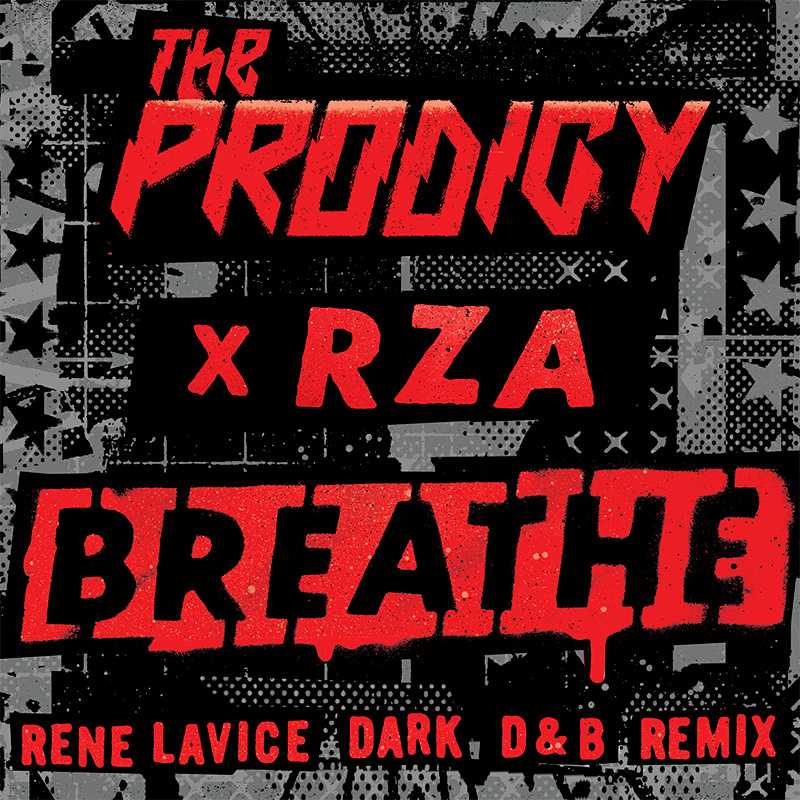
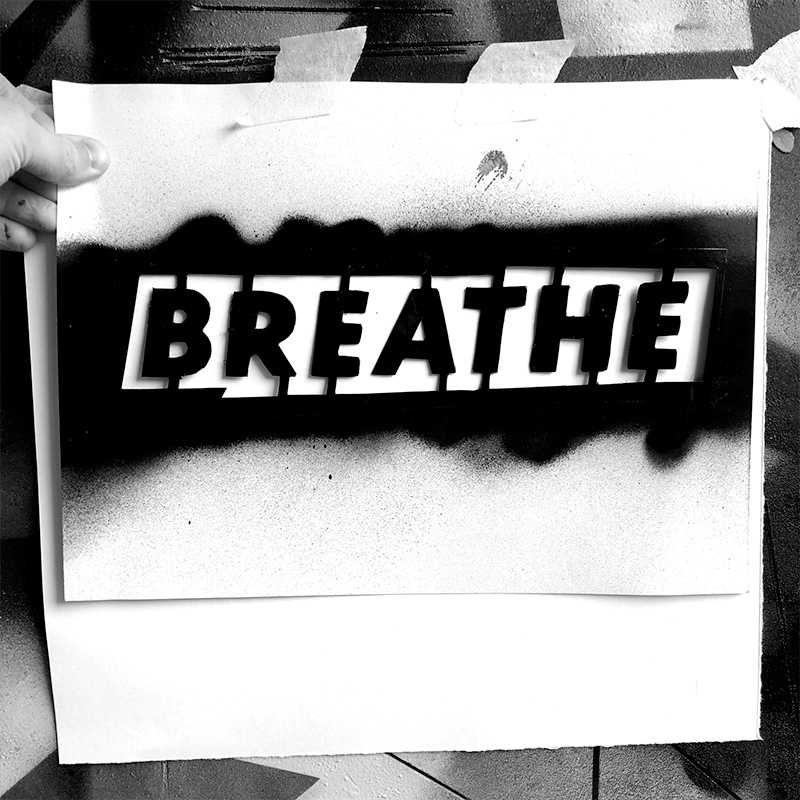
Then, on 3 September 2021 both ‘Liam H and Rene LaVice Re-Amp’ and ‘René LaVice Dark D&B Remix’ saw a strictly limited white label vinyl release, capped at a pressing of just 300 copies. Alongside the primary RZA collaboration, the record features its instrumental, which was released exclusively on this white label.


The remix lineage didn’t end there. In 2022, to commemorate the 25th anniversary of ‘The Fat of the Land’, another heavy drum and bass remix by Mefjus & Camo & Krooked was officially released. Currently available across digital streaming platforms, it was also pressed on the aforementioned 30th-anniversary single vinyl. And this latest ‘Breathe’ iteration strongly suggests that the catalog of ‘Breathe’ remixes is still far from closed!
In our next article, check out our definitive history of the ‘Breathe’ music video, shot by the legendary Walter Stern. Packed with exclusives – firsthand commentary from the crew members and the rarest behind-the-scenes photos.
Headmaster: SPLIT, SIXSHOT
Additional thanks to: Jim Davies, Alison Fielding
Donate
 Tether (USDT)
Donate Tether(USDT) to this address


YOOMONEY (RUS): 7928З82272З
